


Introduction
Many organisations still talk about AI as if model quality were the decisive question. In enterprise environments that is often not the main limit.
The more important question is this: what context does the model receive, and what rights does it have when accessing company knowledge?
Why does context matter more than it first seems?
The same model can produce very different results depending on whether it:
- can see internal policies,
- has access to relevant customer or project data,
- understands the company’s terminology,
- and is restricted to approved sources.
That is why enterprise AI value is to a large extent a context-engineering problem.
The three core layers
1. Data
Which sources does the AI work from? Documents, tickets, CRM, ERP, wiki pages, email summaries?
2. Context
What selection, ordering, prioritisation, and explanatory framing is applied to that data?
3. Access
What is visible, what is not, under which role, and with what logging?
If those three layers are not designed together, even a strong model will still lead to weak business usage.
Typical enterprise problems
Fragmented knowledge
Knowledge lives across multiple systems with uneven quality.
Noisy document space
There are too many outdated, duplicated, or contradictory documents.
Broken access patterns
The AI can either see too much or too little.
Missing auditability
It is not clear which sources shaped the output.
What should be fixed first?
Define source boundaries
Do not connect everything at once. The first use case needs a selected and trustworthy source set.
Improve document hygiene
Old, misleading, and orphaned documents create serious risk.
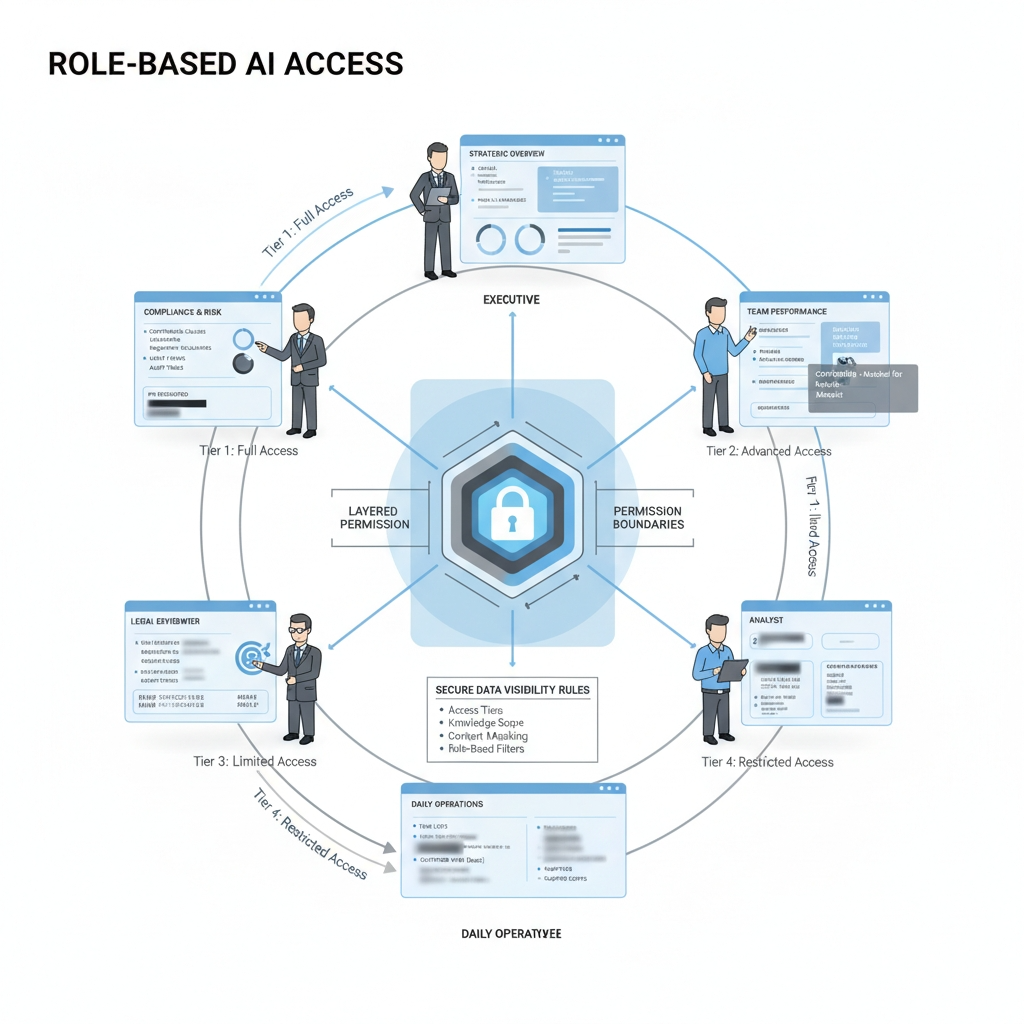
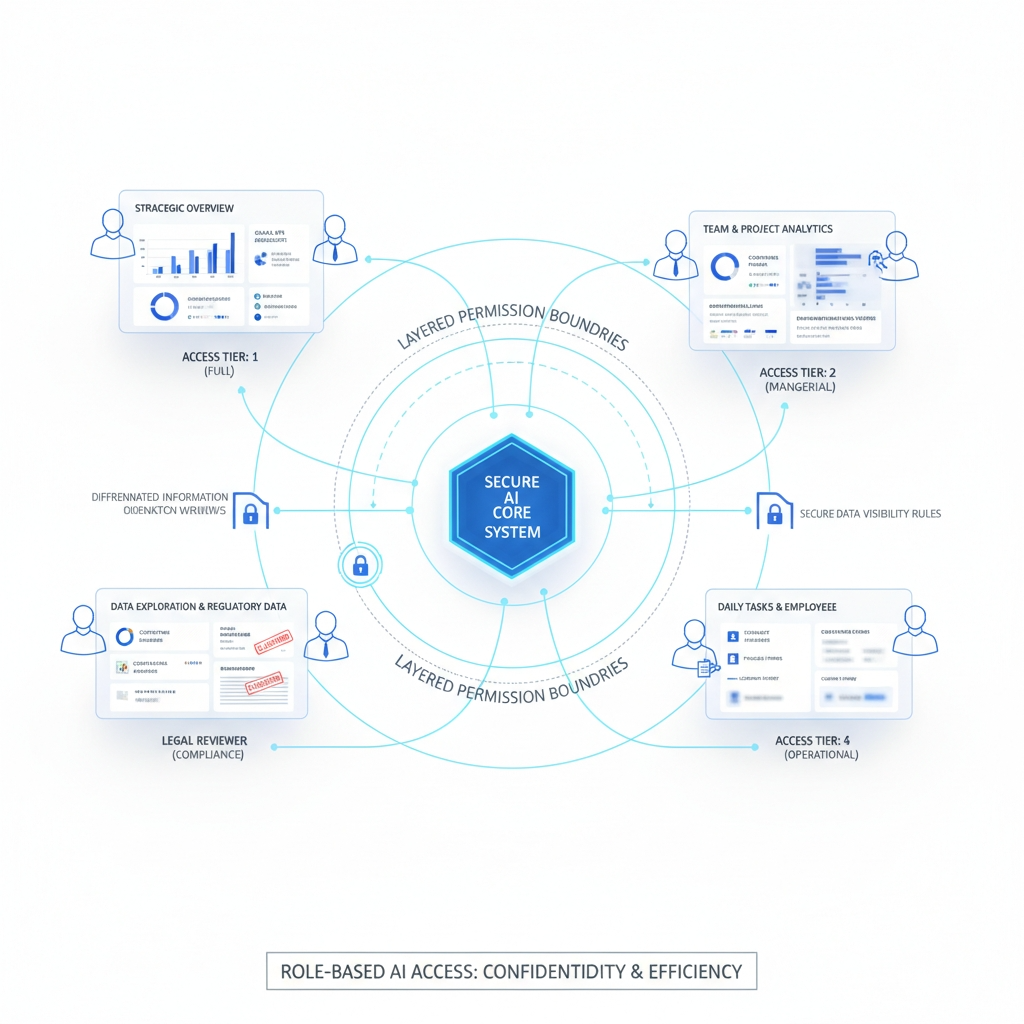
Apply role-based access
The same question means different things in an executive, operational, or support role.
Build traceability
It must be possible to trace which sources a response or recommendation was built from.
Where does the architect’s role come in?
It matters a great deal here.
The architect may be responsible for:
- defining the source-system onboarding strategy,
- aligning the access model,
- designing reusable context-building patterns,
- and planning for auditability.
This is where many organisations realise that an AI programme is also a catalyst for data architecture.
Closing
Enterprise AI is not simply “question and answer”. It is governed access to relevant company knowledge. That is why it is not enough to choose a good model. You also need to build the right context and the right access model around it.