


Introduction
An AI hybrid company is not the outcome of a single project. It is a way of operating that takes shape in several waves.
That is why adoption needs more than a simple roadmap. It needs a transition path that handles:
- pilots,
- governance,
- platform decisions,
- capability building,
- and scaling.
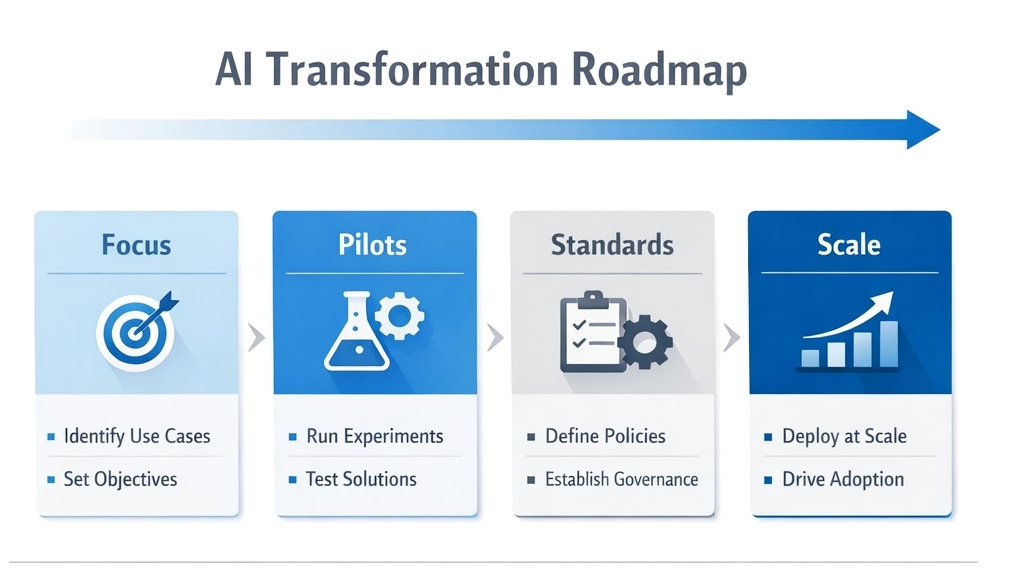
A four-phase pattern
1. Focus and framing
This is where the company defines:
- which business problems matter,
- which use-case types fit,
- and what the data and risk boundaries are.
2. Targeted pilots
Start a small number of measurable use cases.
3. Operating standards
Create templates, control points, measurement logic, access rules, and platform patterns.
4. Scale
Extend the patterns that already work repeatably.
What goes wrong with a poorly designed roadmap?
- too many pilots start in parallel,
- measurement is not comparable,
- governance is inconsistent,
- each business unit follows its own path,
- and the platform grows faster than organisational maturity.
That can easily turn into expensive chaos.
Which artefacts does the roadmap need?
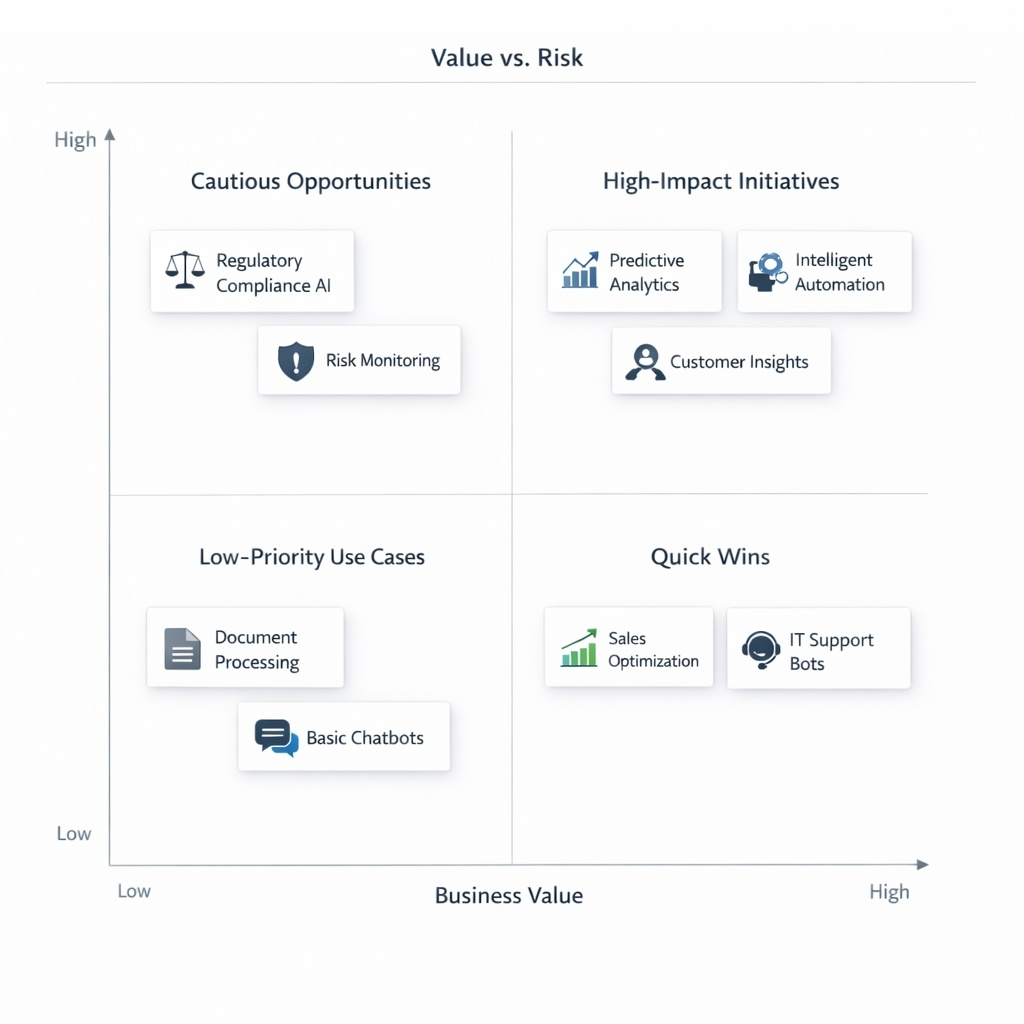
Use-case portfolio
Which initiatives exist, and what value and risk do they carry?
Pilot canvas
Every pilot should begin with the same minimum structure.
Governance rule set
Who approves what, and which risk classes exist?
Technology reference architecture
Not overly detailed, but built around shared patterns.
Capability development plan
Not generic AI training, but role-based capability building.
What should leadership pay attention to?
Leadership should avoid three traps:
- enterprise-wide communication that starts too early,
- too much hype with too little measurement,
- and fast platform purchasing before enough operating learning has happened.
The better leadership question is not “when will the AI programme be finished?” It is when does this become a repeatable company capability?
Closing
The path toward an AI hybrid company is not perfectly straight, but it is designable. Companies that treat it as a learning transition instead of a one-off programme are far more likely to build a real and durable advantage.